
Context arrives at the moment of decision
Enrichment attached at detection time is what moves an alert from "investigate when there is time" to "investigate now" — a judgement that currently depends on who is on shift.

Enrich every detection with global threat context.
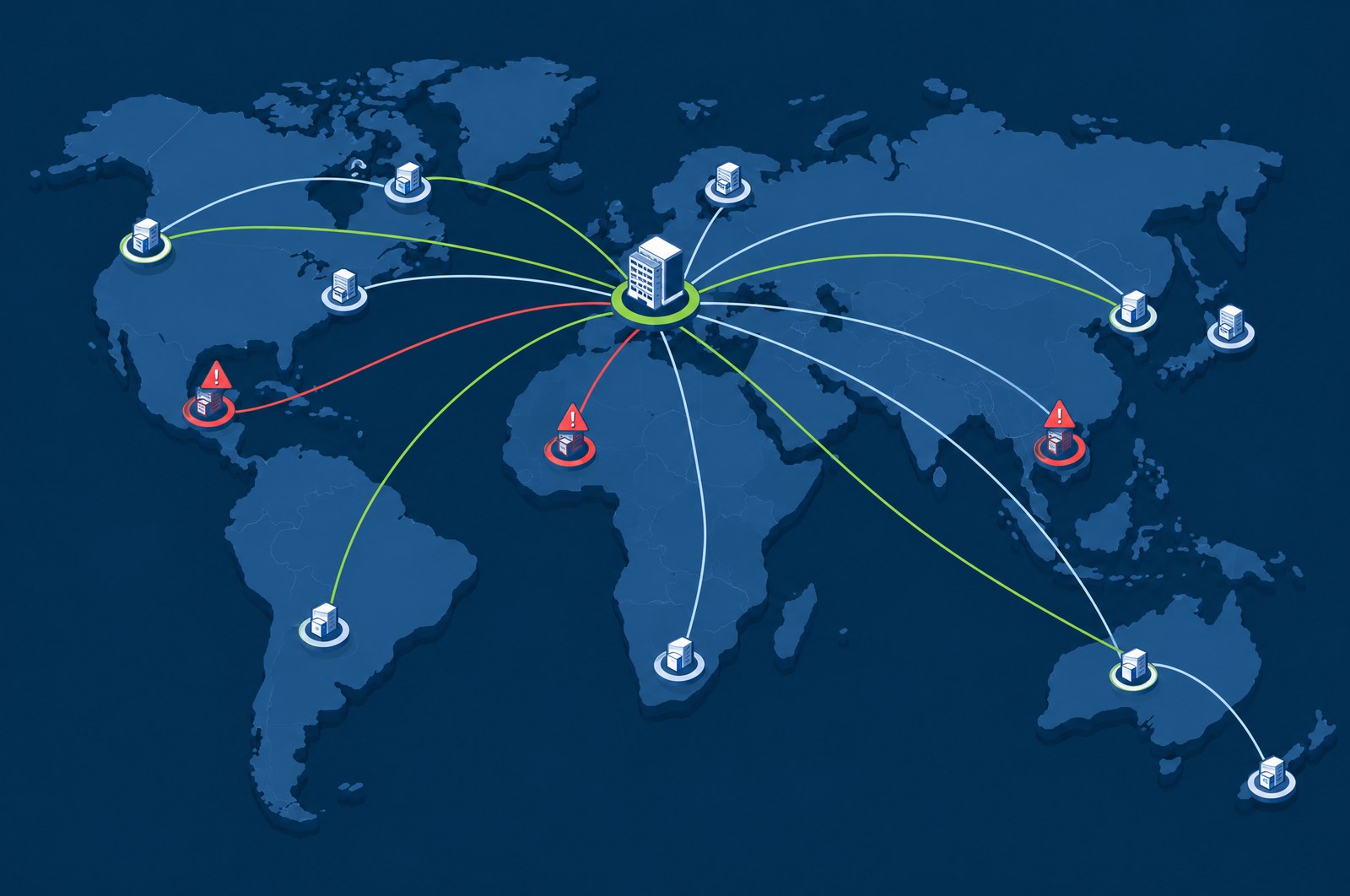
Intelligence is worth having when it changes a decision. GuardsArm enriches detections with indicator context and shows the external peers your endpoints are genuinely talking to.
What is at stake
Intelligence that requires a pivot to consult gets consulted during the post-incident review, by which point its value has passed.
Enrichment attached at detection time is what moves an alert from "investigate when there is time" to "investigate now" — a judgement that currently depends on who is on shift.
When the same context is on the record for everyone, two analysts reach the same conclusion about the same alert. That consistency is what makes SOC output auditable.
Mapping where your endpoints genuinely communicate, rather than animating inbound internet noise, produces something an analyst can act on instead of something that looks impressive on a wall.
Who carries this
The SOC consumes it. The map is also, in practice, the artefact most often shown to executives — which is an argument for it being accurate rather than decorative.
The problem
Most organisations that purchase a threat feed end up with a feed rather than a capability. The indicators arrive, they land in a platform, and the connection between them and the alert an analyst is currently looking at is made by the analyst — if they think of it, and if they have the time.
The failure is one of placement rather than quality. Intelligence that requires a pivot to consult is intelligence that gets consulted during post-incident review, not during triage. By then its main value, which was helping decide what to look at first, has already passed.
The second failure is more visible and less discussed: the threat map. Nearly every security product ships one, and nearly all of them animate inbound scanning traffic against an internet-facing address. That traffic is constant, affects everyone equally, and means nothing in particular. It makes an impressive display and a useless control.
A map of who scanned your firewall is a map of the internet. A map of where your endpoints are actually talking is a map of your risk.
Capabilities
Tens of thousands of threat indicators ingested and available to enrich detections as they fire.
File hashes checked against threat-intelligence sources and malware databases, feeding both FIM and the Malware Center.
Maps your endpoints' real external network peers against known-bad intelligence and geolocation. It shows the connections your estate is actually making, not a decorative globe of unrelated attacks.
MISP-based threat-intelligence integration for organisations already running a sharing platform.
How it fits the platform
Enrichment happens at detection time, so an analyst opening an alert sees the indicator context already attached rather than pivoting to a separate intelligence tool.
How it works
Tens of thousands of indicators are brought in and kept current, including through MISP-based integration for teams that already run a MISP instance or subscribe to a sharing community.
Indicator context is attached as the finding is created, not looked up afterwards. An analyst opening an alert sees what is known about the address or hash already on the record.
Hashes from file integrity monitoring are checked against threat-intelligence sources and malware databases, which turns a file-change event into a verdict rather than a question.
The endpoint threat map plots the external hosts your endpoints are genuinely communicating with, matched against known-bad intelligence and geolocation. It is a map of your traffic, not a visualisation of global internet background noise.
The threat map
The distinction is not cosmetic. It changes whether anyone should act on what the map shows.
| Aspect | The usual inbound-attack map | GuardsArm endpoint threat map |
|---|---|---|
| What is plotted | Inbound scan and probe traffic hitting any internet-facing address. | The external peers your endpoints actually connected to. |
| What a line means | Someone on the internet touched a port. This happens continuously, to everyone. | A host inside your estate communicated with that address. |
| What to do about it | Nothing. It is ambient. | Investigate, because an internal host is the one that initiated it. |
| Who it is for | A screen in a reception area. | An analyst deciding where to look next. |
In the queue
The value is almost entirely in placement — context on the finding, at the moment the finding is made.
Terms
An address, domain, hash or pattern associated with known malicious activity. Useful as enrichment and as a fast first filter; insufficient on its own, because indicators age out quickly.
A widely used open threat-intelligence sharing platform. Integration means a community or sector feed you already subscribe to flows into detection rather than sitting in a separate tool.
Checking a file hash against intelligence sources and malware databases to establish whether it is already known. The cheapest high-confidence verdict available on a file.
Attaching context as the finding is created rather than when an analyst opens it. The difference shows up in triage speed and, more importantly, in triage consistency.
Background
Plain explainers on the underlying ideas, written for someone evaluating rather than buying.
Questions
It maps your endpoints' real external network peers against known-bad intelligence and geolocation. It shows connections your estate is actually making, rather than a globe of unrelated attacks elsewhere.
Yes, through MISP-based integration, which suits organisations already running a sharing platform. Sector sharing communities tend to be more valuable per item than broad commercial feeds, because the relevance filtering has already happened.
At detection time, so an analyst opening an alert sees indicator context already attached rather than pivoting to a separate intelligence tool.
Works with
Every module runs in the same self-hosted stack and shares the same telemetry, severity model and response engine.
We will walk through the console, the deployment model and what it takes to stand it up in your environment.