K-12 Cybersecurity: Protecting Student Data on a School Division Budget
Thousands of shared devices, a tiny IT team, students who probe for fun, and ransomware groups that target school divisions specifically.
GuardsArm Team
Security Experts
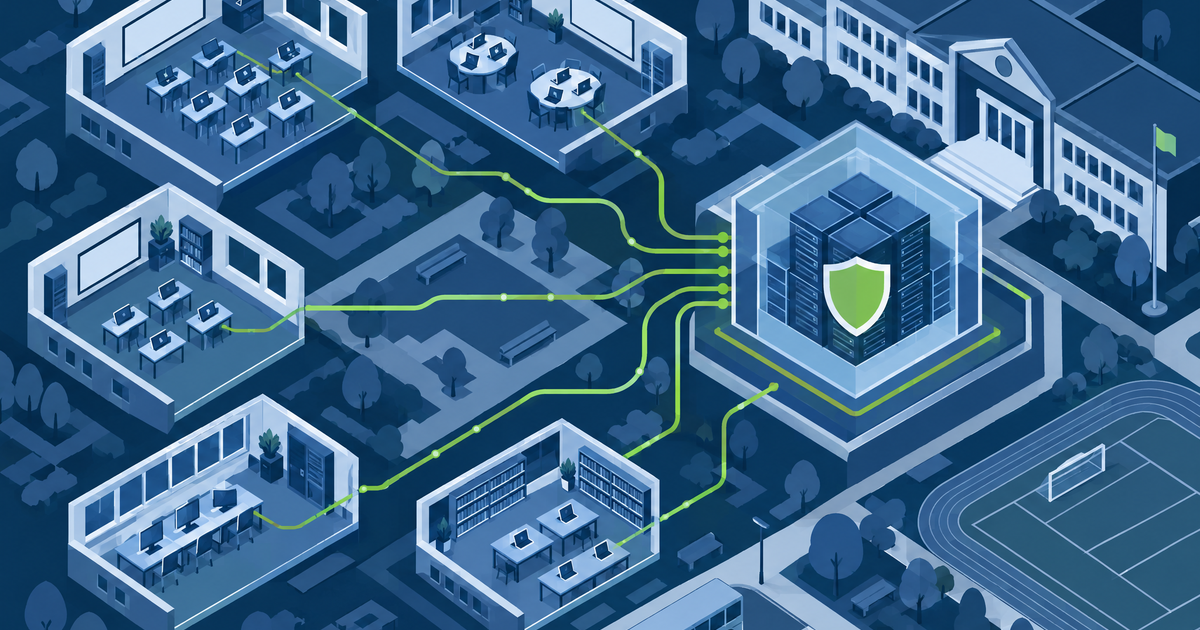
School divisions are attractive targets and poorly resourced defenders. They hold rich personal data on minors, depend on systems that must run during term time, and typically employ a handful of IT staff for thousands of users across many sites.
Ransomware groups have targeted education deliberately, for a simple reason: a division that cannot run classes has very little tolerance for a prolonged outage.
The data is unusually sensitive
Student records combine identity information with a great deal more: health and medication details, special education assessments, family circumstances, attendance, discipline records, and in some cases child protection information.
That last category deserves specific handling. Access to it should be tightly restricted and logged, separately from general student information, because the consequence of exposure is qualitatively different from a leaked address.
The data also belongs to minors, which means the harm from identity misuse can persist undetected for many years.
Where divisions are actually exposed
Shared devices are the structural problem. Classroom carts, lab machines and library computers are used by dozens of students. Individual accounts and enforced logout are the only way any audit trail means anything, and enforcing them against classroom practicality is a genuine tension.
Staff phishing remains the main entry route, and school staff are a difficult audience for awareness training — time-poor, pulled from teaching, and uninterested in generic corporate content.
Students probing is a category unique to this sector. Some of it is curiosity, some is grade-related, and it is a reason your internal network cannot be treated as trusted.
Edtech sprawl is the least visible. Teachers adopt applications independently, frequently free ones, and student data ends up with vendors nobody assessed.
Edtech vendor risk
This is where divisions carry the most unmanaged exposure. A realistic approach:
| Step | What it looks like in practice |
|---|---|
| Discover what is in use | Ask teachers; check network egress; check the billing |
| Triage by data sensitivity | Which hold student names, which hold more |
| Contract the significant ones | Data handling, breach notification, deletion on exit |
| Provide an approved list | Teachers will use something; make the approved route easy |
| Review annually | Applications change owners and terms |
The fourth row is the one that works. Prohibition without a sanctioned alternative produces quiet non-compliance, because the teacher still needs a tool for Monday.
Continuity matters more than in most sectors
A school division cannot send students home indefinitely, and cannot easily run manual alternatives for attendance, safeguarding or communication with families.
Priorities that follow:
- Offline-capable emergency procedures for attendance and safeguarding
- Immutable backups of the student information system, tested by restore. See immutable backups.
- A communications route to families that does not depend on the systems that might be down
- A defined decision about whether schools operate during an outage, made before the outage
Building capability on a public budget
Two structural advantages divisions should use: joint procurement across divisions or with a ministry, and sector-specific sharing of threat information, which is unusually active in education.
A realistic allocation for a division with two or three technical staff:
| Priority | Why it comes first |
|---|---|
| MFA for all staff accounts | Closes the main entry route |
| Immutable, tested backups of the student information system | Determines how bad ransomware gets |
| Bought monitoring, out of hours | Attacks arrive when nobody is in the building |
| Network separation of building systems | Cameras, HVAC and access control off the main network |
| Annual exercise with the leadership team | Decisions about closing schools are not IT decisions |
| Edtech approval process | Slows the growth of unassessed exposure |
Notice that only one of those is a tool purchase. Most of the value is in process and in buying the capability that cannot realistically be staffed.
Students are a distinct threat model
Worth stating plainly because it is unlike other sectors. Some students will attempt to access systems — for grades, for curiosity, or for status. A few will be genuinely skilled.
That has design consequences:
- Do not treat the internal network as trusted. Student and staff networks should be separated, and staff systems should not be reachable from student devices.
- Expect credential sharing between students and, occasionally, from staff to students.
- Log administrative actions in the student information system, because grade changes are the classic case.
- Have a response that is proportionate. A student incident is a safeguarding and disciplinary matter as well as a security one, and the division needs a policy that involves the right people.
Where to start
Find out what edtech applications are actually in use — from teachers, from network egress, and from expense records. Divisions consistently discover several times more than the approved list contains, and student data is in all of them.
GuardsArm works with school divisions on assessment, monitoring and vendor risk. See K-12 education solutions or book a scoping call.
Written by GuardsArm Team
Our team of cybersecurity experts brings decades of combined experience in penetration testing, compliance auditing, and incident response. We're dedicated to helping organizations strengthen their security posture.
Take the next step on this topic
Talk to the GuardsArm team about how these services apply to your environment.