
- SOC 2 Readiness
- 24/7 incident line
- 24/7 security operations team
Canadian Privacy Compliance
PIPEDA Compliance ServicesPersonal Information Protection and Electronic Documents Act
Ensure your organization meets Canadian privacy law requirements with our comprehensive PIPEDA compliance services. Protect personal information while maintaining business efficiency.
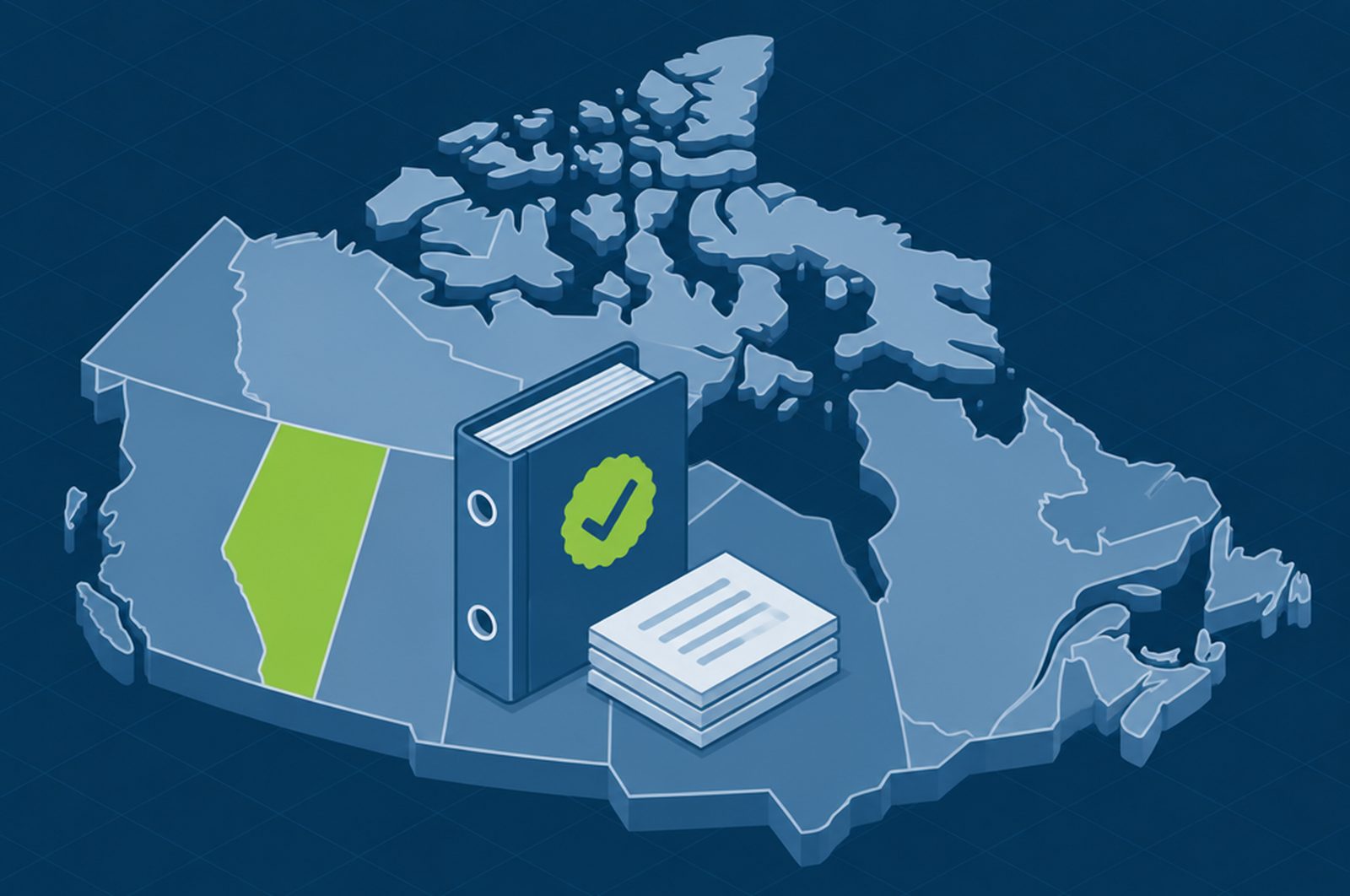
What PIPEDA Asks of Your Organization
The Personal Information Protection and Electronic Documents Act is Canada's federal private-sector privacy law. It sets the rules for how businesses collect, use and disclose personal information in the course of commercial activity, and it is built on ten fair information principles drawn from a national standard. The principles are short to read and hard to evidence: most organizations have a privacy policy, far fewer can show where personal information actually lives, who it is shared with and how a breach would be detected and recorded.
Our team approaches PIPEDA as a security and operations problem as much as a legal one. We work with your counsel and your privacy officer to turn each principle into a practice your staff follow, and we make sure the safeguards behind it would stand up if the Office of the Privacy Commissioner of Canada (OPC) asked questions after a complaint or a breach report.
Does PIPEDA apply to you?
Question 1: Are you a federal work, undertaking or business, such as a bank, airline, telecom, broadcaster or interprovincial trucking or rail company?
If yes
PIPEDA applies to your customer information and to your employees’ information, in every province.If no
Go to the next question.Question 2: Do you collect, use or disclose the personal information in the course of commercial activity?
If yes
Go to the next question.If no
PIPEDA generally does not apply, for example to a charity’s core non-commercial activities or to a provincially regulated employer’s staff records. Check the provincial law instead.Question 3: Does the activity happen in Alberta, British Columbia or Quebec, and stay inside that province?
If yes
The provincial Act applies to that activity instead: Alberta PIPA, BC PIPA or Quebec’s Law 25. PIPEDA still applies when the information crosses a provincial or national border in a commercial transaction.If no
Go to the next question.Question 4: Is it personal health information held by a custodian in Ontario, New Brunswick, Newfoundland and Labrador or Nova Scotia?
If yes
Those provinces’ health information laws have been recognized as substantially similar, so they apply to custodians’ activities, for example Ontario PHIPA.If no
PIPEDA applies. That covers commercial activity in Saskatchewan, Manitoba, the Atlantic provinces and the territories, and cross-border flows everywhere.
Guidance, not legal advice. Coverage depends on facts: a single business can be under PIPEDA for one activity and a provincial Act for another. When in doubt, design to the stricter rule.
The rules people ask us about most
Meaningful consent
PIPEDA requires consent that people can actually understand. The OPC’s guidelines on meaningful consent ask organizations to put four things up front: what information is collected, who it is shared with, for what purposes, and any meaningful risk of harm. Layered notices and just-in-time prompts work better than a long policy nobody reads.
Express consent (an active yes) is expected when information is sensitive (health, financial, biometric), when the use would be outside what a reasonable person would expect, or when it creates a meaningful residual risk of significant harm. Implied consent can work for obvious, low-risk uses, such as using an address to ship an order.
People can withdraw consent at any time, subject to legal or contractual limits and reasonable notice; tell them what withdrawing means. Even with consent, a purpose must be one a reasonable person would consider appropriate in the circumstances. The OPC treats a few purposes as no-go zones, such as profiling that leads to unlawful discrimination.
Transfers for processing
Sending personal information to a vendor to process on your behalf (a cloud host, payroll firm or call centre) is treated as a use, not a disclosure, so you do not need fresh consent. You stay accountable for it. Use contracts that give a comparable level of protection: limits on use, safeguards, breach reporting back to you, and return or deletion at the end.
PIPEDA does not require data to stay in Canada. It does expect you to be open about it: tell people their information may be processed in another country and may be accessible to that country’s courts and authorities. Some contracts and sectors do require Canadian residency; GuardsArm’s SIEM and SOC keep security data in Canada for that reason.
Access and correction
Individuals can ask whether you hold their personal information, how it has been used, and to whom it has been disclosed. You must respond within 30 days. You can extend by up to 30 more days in set cases (for example when meeting the deadline would unreasonably interfere with operations), or longer to convert the information to an alternative format, as long as you tell the person and explain they can complain to the OPC.
Responses should be free or at minimal cost. Where information is shown to be inaccurate or incomplete, correct it and, where appropriate, pass the correction to third parties who received it. Refusals must cite a specific exception, such as solicitor-client privilege or information about another person.
What the OPC can and cannot do
The Privacy Commissioner of Canada investigates complaints and can start its own investigations. It issues findings and recommendations, can enter compliance agreements, and names organizations when it is in the public interest. It cannot issue fines or binding orders itself. A complainant or the Commissioner can take the matter to the Federal Court, which can order changes and award damages.
Fines of up to $100,000 per offence apply to a small set of offences: knowingly failing to report a breach, notify individuals or keep breach records, obstructing an investigation, or retaliating against an employee who reported a contravention.
A proposed replacement, the Consumer Privacy Protection Act in Bill C-27, would have added large penalties; it died when Parliament was prorogued in January 2025. PIPEDA remains the law, but plan for a successor bill.
Guidance, not legal advice. This summarizes the law in plain language. Check the current text of the Act, its regulations and the regulator’s guidance, and get legal advice for your situation.
How the private sector privacy laws compare
| Topic | PIPEDA (federal) | Alberta PIPA | BC PIPA | Quebec (Law 25) |
|---|---|---|---|---|
| Who it covers | Commercial activity where no substantially similar provincial law applies, federal works such as banks, airlines and telecoms (including their employees), and information that crosses provincial or national borders. | Private sector organizations in Alberta, including employee information. Non-profits mainly for commercial activities. | Private sector organizations in BC, including non-profits, and employee information. | Private sector enterprises that collect, hold, use or communicate personal information about people in Quebec. Public bodies have their own Act. |
| Regulator | Office of the Privacy Commissioner of Canada (OPC) | Information and Privacy Commissioner of Alberta (OIPC) | Information and Privacy Commissioner for BC (OIPC BC) | Commission d’accès à l’information (CAI) |
| Breach notification | Real risk of significant harm: report to the OPC and notify individuals as soon as feasible. Record every breach for 24 months. | Real risk of significant harm: notify the OIPC without unreasonable delay. Individuals when the Commissioner requires it. | No general statutory duty under PIPA. The OIPC BC recommends notifying where harm is likely. | Risk of serious injury: notify the CAI and the persons concerned promptly. Register every incident. |
| Consent | Meaningful consent. Express consent for sensitive information or unexpected uses. | Express, deemed or opt-out consent, each under conditions set by the Act. | Express, implied or deemed (opt-out) consent, each under conditions set by the Act. | Manifest, free and enlightened consent for each specific purpose. Express consent for sensitive information. A parent consents for a child under 14. |
| Access request deadline | 30 days, extendable in set cases | 45 days, extendable in set cases | 30 business days, extendable in set cases | 30 days |
| Privacy impact assessments | Recommended good practice | Good practice, not required by PIPA | Not required by PIPA (public bodies under FIPPA must do them) | Required for new information system or electronic service projects and before communicating information outside Quebec |
| Information leaving the jurisdiction | Allowed. You stay accountable, need contracts giving comparable protection and should tell people it may be processed abroad. | Allowed. Policies and notices must cover service providers outside Canada. | No specific transfer rule. Reasonable security arrangements still apply. | Allowed after a privacy impact assessment shows adequate protection, under a written agreement. |
| Penalties and enforcement | The OPC investigates and can go to Federal Court, but cannot fine. Fines of up to $100,000 for certain offences, such as knowingly failing to report or record a breach. | Commissioner can issue binding orders. Offence fines up to $100,000 for organizations. Individuals can sue for damages after an order. | Commissioner can issue binding orders. Offence fines up to $100,000 for organizations. Individuals can sue for damages after an order. | Administrative monetary penalties and penal fines that scale with worldwide turnover (into the millions), plus a private right of action with possible punitive damages. |
Guidance, not legal advice. A simplified summary. Each Act has exceptions and conditions this table cannot show, and privacy reform has been under discussion federally and in several provinces, so check the current text and any amendments before relying on it.
Had a breach? Check the real risk of significant harm test
Do we have to notify?
Seven questions about what happened. You will get the factors that drive the PIPEDA test, who to notify and when, and what to record. This is guidance, not legal advice; confirm with your privacy officer or counsel.
Your first 90 days to a defensible PIPEDA program
- 1Days 1 to 15
Name the owner and map the data
- Appoint the accountable person and a backup
- Inventory customer, employee and vendor data
- List every vendor and country the data reaches
- Start the breach register today
- 2Days 16 to 45
Fix notices and consent
- Rewrite the privacy policy in plain language
- Add just-in-time notices where data is collected
- Switch sensitive uses to express consent
- Set retention periods for each data set
- 3Days 46 to 75
Close the safeguard gaps
- MFA everywhere, starting with email and admin
- Encrypt laptops and phones
- Centralize logs with 24/7 monitoring
- Add privacy terms to vendor contracts
- 4Days 76 to 90
Prove it works
- Write and rehearse the breach procedure
- Train staff on requests and incidents
- Test an access request end to end
- Report status to leadership and set a review date
Check your readiness in three minutes
How ready is your PIPEDA program?
Ten questions built on PIPEDA’s ten fair information principles and its breach of security safeguards rules.
Who Needs PIPEDA Compliance?
Federal Jurisdiction
Private Sector
Specific Provinces
PIPEDA's 10 Fair Information Principles
- 1
Accountability
The organization is responsible for personal information under its control, including information passed to service providers, and designates someone accountable for compliance. - 2
Identifying Purposes
The purposes for collecting personal information are identified at or before the time of collection. - 3
Consent
Individuals know about and consent to the collection, use or disclosure of their information, except where the Act allows otherwise. Consent must be meaningful, so people need to understand what they are agreeing to. - 4
Limiting Collection
Collection is limited to what is necessary for the identified purposes, and is done fairly and lawfully. - 5
Limiting Use, Disclosure, and Retention
Information is used or disclosed only for the purposes it was collected for, and kept only as long as those purposes require. - 6
Accuracy
Information is as accurate, complete and up to date as its purpose requires. - 7
Safeguards
Security safeguards match the sensitivity of the information: physical, organizational and technological measures. - 8
Openness
Policies and practices for managing personal information are readily available to the public. - 9
Individual Access
On request, individuals are told whether the organization holds their information, can see it, and can challenge its accuracy. - 10
Challenging Compliance
Individuals can raise a compliance concern with the accountable person, and the organization has a process to investigate it.
Breach of Security Safeguards: What the Law Requires
Assess the real risk of significant harm
Report to the OPC
Notify affected individuals
Notify organizations that can help
Keep a record of every breach
Know the consequences
Comprehensive PIPEDA Compliance Solutions
Data Inventory & Mapping
Privacy Policy Development
Consent Management
Access Request Procedures
Breach Response Planning
Compliance Audits
How a PIPEDA Engagement Runs
- Step 1
Jurisdiction check
We confirm which law governs each of your activities: PIPEDA, a substantially similar provincial act, or both. Organizations working across provinces often find the answer differs by line of business. - Step 2
Personal information inventory
We interview the teams that collect and use personal information and map what you hold, why, where it is stored, who can access it, which service providers receive it and how long it is kept. - Step 3
Gap assessment against the ten principles
Each principle is tested against your actual practice, not only your written policy. Findings are rated by the risk they create for individuals and for the business. - Step 4
Safeguards review
Our security team checks that safeguards match the sensitivity of the data: access control, encryption, logging, vendor controls and the ability to detect a breach in the first place. - Step 5
Remediation and documents
We draft or update the privacy policy, consent language, access request procedure, retention schedule, breach response plan and breach record, and help you put them into practice. - Step 6
Training and ongoing review
Staff who handle personal information are trained on the new procedures, and we can return on a regular cycle to review changes, new vendors and the breach record.
Industry-Specific PIPEDA Compliance
Healthcare
Financial Services
Retail & E-commerce
Technology
Telecommunications
Transportation
What You'll Receive
- PIPEDA compliance assessment report
- Privacy policy and notice templates
- Consent forms and mechanisms
- Data breach response procedures
- Employee training materials
- Privacy impact assessment templates
- Record retention schedules
- Third-party agreement templates
- Compliance monitoring dashboard
- Ongoing compliance roadmap
Compliance Process Timeline
- 1
Initial Assessment (Week 1-2)
Current state analysis and gap identification
- 2
Implementation (Week 3-6)
Policy development and process implementation
- 3
Training (Week 7-8)
Staff training and awareness programs
- 4
Ongoing Support
Continuous monitoring and compliance updates
Common PIPEDA Gaps
Consent buried in a policy nobody reads. The OPC expects consent to be meaningful, which means the key points, including any sharing with third parties and any risk of harm, are presented in a way people can understand at the moment they decide.
No breach record. Many organizations report the serious incidents but keep nothing for the minor ones. The record requirement covers every breach of security safeguards involving personal information, and it has to be kept for 24 months.
Service providers without contractual protection. Under the accountability principle you remain responsible for information you transfer for processing. Contracts should set comparable safeguards, breach notice back to you and return or deletion at the end of the relationship.
Retention without an end date. Holding information "just in case" breaks the limiting-retention principle and enlarges the impact of any breach. A retention schedule with real deletion dates is one of the most effective changes a business can make.
Evidence, not assumptions
PIPEDA Compliance Services: evidence and assessment handoff
Readiness is preparation, not an outcome determination. The exact evidence and external review process depend on the applicable requirements and agreed scope.
Readiness support
Define the boundary, review control design, coordinate remediation and organize an evidence index. Control owners remain responsible for operating controls and supplying accurate records.
Independent audit or certification
Where applicable to PIPEDA Compliance Services, an independent auditor, assessor, certification body or authority sets its own procedures, evaluates the evidence and reaches its own conclusion. Readiness support does not replace that work or guarantee its outcome.
Evidence examples
Control design and governance
- Approved policies, standards and procedures with version and ownership history.
- A scope and control matrix showing requirement coverage and control owners.
- Risk decisions, exceptions, remediation approvals and leadership review records.
Operating and technical records
- Dated access reviews, change tickets, training completion and vulnerability follow-up.
- Source exports for identity, MFA, logging, backup and other in-scope configurations.
- Records that show both the review period and any gaps, failures or corrective actions.
Data, third parties and testing
- Relevant data inventories or flow maps, vendor records and contractual control evidence.
- Test plans and results, exercise records, incident timelines and tracked follow-up actions.
- An evidence index linking each source item to its owner, control and assessment request.
Roles and handoff
Your control owners
Operate controls, provide authentic source evidence, explain variations and complete remediation.
GuardsArm readiness team
Map requests, review completeness and consistency, track gaps and prepare the handoff package.
Independent reviewer, where applicable
Defines its requests and procedures, evaluates evidence independently and issues conclusions within its remit.
- 1
Request
Tie each evidence request to the agreed scope, criterion, owner and review period.
- 2
Collect
Preserve source context and record dates, coverage and known limitations.
- 3
Review
Mark items ready, open or not applicable, with rationale and follow-up ownership.
- 4
Hand off
Provide the index, source access and outstanding-item log to the intended reviewer.
PIPEDA Compliance FAQs
Answers to the questions Canadian organizations ask us about federal privacy law.
Does PIPEDA apply to my organization?
PIPEDA applies to private-sector organizations that collect, use or disclose personal information in the course of commercial activity. In Alberta, British Columbia and Quebec, provincial laws deemed substantially similar govern activity that stays within the province, but PIPEDA still applies when personal information crosses provincial or national borders in the course of commercial activity. Federally regulated businesses, such as banks, airlines, telecommunications companies and interprovincial transport, are covered by PIPEDA everywhere in Canada, including for their employees' information.
Does PIPEDA cover employee information?
Only for federally regulated employers. For most other private-sector employers, employee personal information is either covered by a provincial law, such as Alberta PIPA or BC PIPA, or not covered by a general private-sector privacy statute at all. We confirm which situation you are in during the jurisdiction check.
What counts as "significant harm" for breach reporting?
The Act defines significant harm broadly. It includes bodily harm, humiliation, damage to reputation or relationships, loss of employment, business or professional opportunities, financial loss, identity theft, negative effects on a credit record, and damage to or loss of property. The test is whether a real risk of that harm exists, judged by the sensitivity of the information and the probability of misuse.
Has PIPEDA been replaced by the Consumer Privacy Protection Act?
No. Bill C-27, which would have enacted the Consumer Privacy Protection Act, did not pass. It died on the Order Paper when Parliament was prorogued in January 2025. PIPEDA remains the federal private-sector privacy law in force. Any future reform would need a new bill, and we will update our guidance if one is enacted.
How long does a PIPEDA compliance engagement take?
For a single-entity organization with a manageable number of systems, the assessment usually takes a couple of weeks and the full program, including documents and training, follows the timeline shown above. Larger groups with many vendors, multiple provinces or sensitive data such as health or financial information take longer, and the inventory step drives most of the difference.
Do you act as our privacy officer?
The accountable individual must be someone your organization designates, and many clients keep that role in house. We support that person with the program, the documents, the breach record and the security safeguards, and can provide ongoing advisory support so they are not working alone.
Still Have Questions?
Our cybersecurity experts are here to help. Get personalized answers and a free security consultation.